Locket
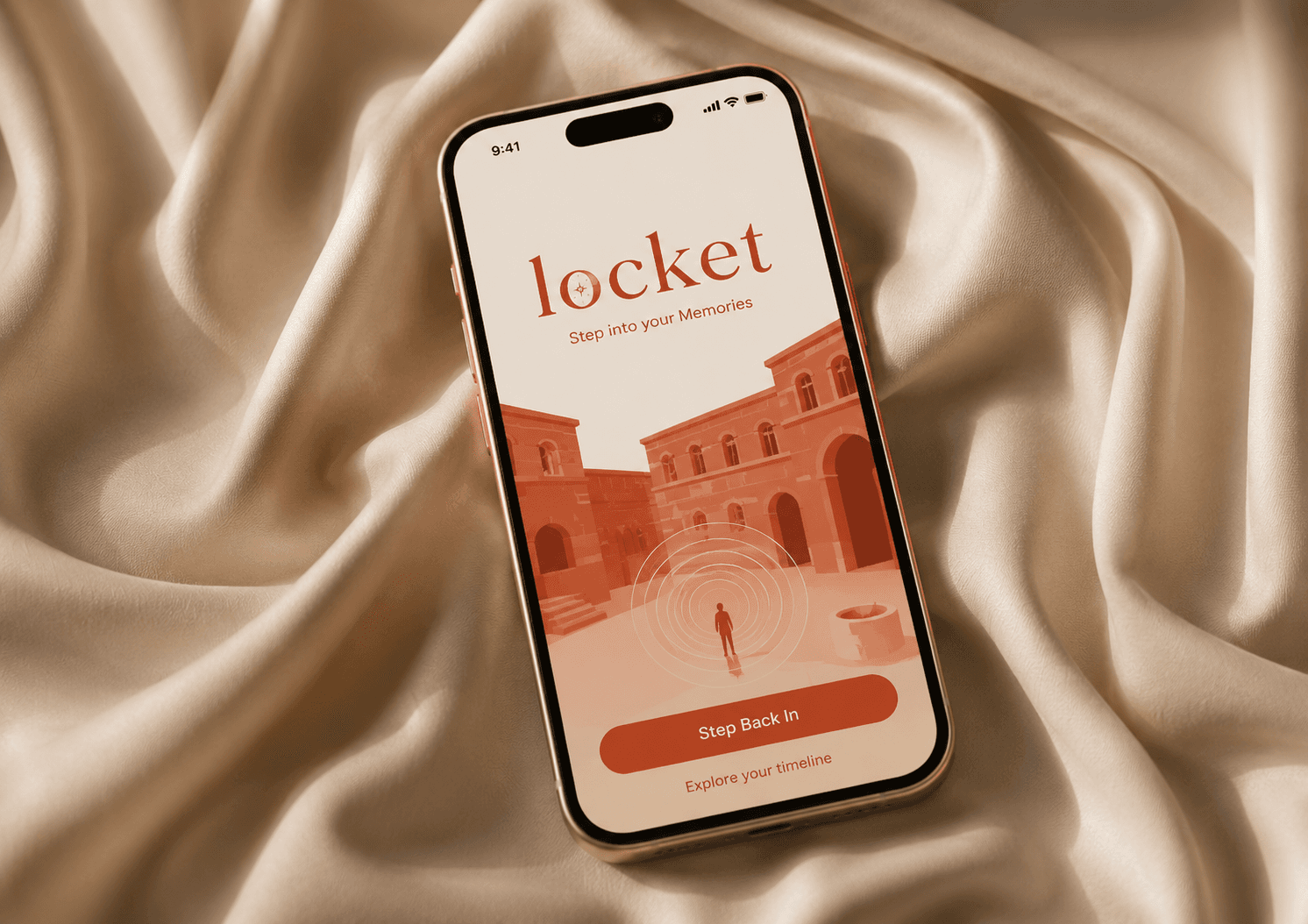
What if your memories stayed where they happened — and found you when you returned? Locket is a location-based memory app for people who carry two homes in their chest. Not a photo album. Not a map. A feeling.
The Brief
Design for people
who belong
to two places.
This started as a take-home design assessment — one week, solo, from brief to screens. The prompt was open-ended: design a meaningful experience for diaspora communities. People who live away from where they grew up. People who carry the feeling of another place in their body, even when they can't get back to it.
I didn't want to design another social app or a glorified photo album. I wanted to find the emotional core of the problem: you can't go back — but sometimes you find yourself exactly where a memory happened, and you have nothing to hold it with.
That's where Locket started. Not "store your memories." But — place them where they belong, and let them find you.
The context
304 million people
live outside their birth country.
304M
people live outside their birth country
67%
of expats say they miss the feeling of a place, not just the people
1 week
take-home design assessment timeline
Existing apps treat memories as content to be stored — not feelings to be encountered. The diaspora experience isn't about archiving the past. It's about the moments when the past unexpectedly finds you: the smell of rain that takes you back, the street corner you didn't expect to miss.
The concept
Reverse
teleportation.
Every memory app moves you to a memory. You open the app, scroll the timeline, find the photo.
Locket flips this. The memories come to you. You pin a feeling to a place — your grandmother's kitchen, the street you walked every morning, the airport gate where you said goodbye. When you (or someone you care about) physically enters that location, Locket surfaces the memory.
You're not teleported to the past. The past arrives where you are.
What I designed
6 screens.
Every decision earns its place.
Home
Memories placed around you on a map — not in a timeline. You walk through them.
Preserve a Memory
Capture a place with a photo, voice note, or text. Pin it to where it happened.
Gallery
A quiet archive. Every locket you've left, every memory you've walked past.
In Memory
When you're physically near a pinned memory, Locket surfaces it — unprompted.
Memory Ended
A gentle goodbye. The memory fades like a polaroid left in the sun.
Setup
Onboarding that teaches the metaphor: you don't go to your memories. They come to you.
Visual system
Warm.
Earthy.
Nostalgic.
The visual language came from the same emotional space as the product: terracotta reds, aged cream, soft textures. The palette of old letters, worn maps, Sunday afternoon light. Merriweather for the feeling of handwriting. Nunito Sans for clarity when it matters.
Terracotta
Deep Brown
Aged Cream
Stone Grey
Blush
The "o" is a locket. Memory glowing inside.
What this is really about
Designed in a week.
Built from a feeling I know.
I'm part of this community. I know what it feels like to walk past a place and realise you left something there — a version of yourself, a person you loved, a season of life that's gone. This assessment gave me a reason to design what I've always wanted to exist.
Figma · Merriweather + Nunito Sans · Terracotta & Cream · 6 screens · 1 week
View in Figma